


Every interaction with a brand is shaped by design, whether intentional or accidental. Design is not simply about aesthetics. It influences how customers think, feel, and behave. When done well, design becomes a powerful driver of business success.
What Makes Great CX Design
CX design is about creating experiences that truly work for people. Strong design is effective, easy to use, and enjoyable.
Effectiveness means improving functionality in a meaningful way, like a resealable chip bag that keeps snacks fresh without extra effort. Ease of use means aligning with natural human behaviour so that interaction feels intuitive. For example, placing a handle only on the side of a door meant to be pulled reinforces instinctive action. Enjoyment comes from creating a design that people connect with emotionally, like a vibrant mosaic staircase that turns an ordinary moment into something memorable.
The strongest designs hit all three criteria: functional, intuitive, and emotionally engaging.
How Informed Design Decisions are Made
Understanding what defines good design is only the beginning. The next question is how strong design decisions are made in practice.
Effective CX design does not happen in isolation. It often relies on external collaboration and structured input. Three primary tools support this process:
Open innovation brings in outside partners and stakeholders to collaborate on meaningful challenges.
Crowdsourcing taps into a large group of people and customers providing fresh input at multiple levels.
Co-creation goes even deeper, involving customers directly in the innovation process to collaboratively develop solutions.
Bold CX design listens, collaborates, and builds with people, not just for them.
A Great Example of Crowdsourcing at LEGO
LEGO offers a strong example of crowdsourcing in action. Through the LEGO Ideas platform, customers can submit concepts for new LEGO sets or figures directly on the company’s website. Community members then vote for their favourite submission. The company chooses the concept with the most votes to manufacture and sell, and the original creator gets one of the new products for free.
This approach creates a scalable system for gathering customer insight. LEGO gains a steady stream of creative ideas without relying solely on internal teams. Customers gain a voice in shaping the product lineup and experience a deeper connection with the brand. By inviting the community into the decision-making process, LEGO turns collaboration into innovation.
Designing for Real Human Behaviour
At the core of strong CX design is a commitment to human centred thinking. Systems should be built around how people actually behave, not how they are expected to behave.
A powerful example comes from railway safety. Between 2013 and 2018, more than 18,400 lives were lost in train related accidents. In many cases, individuals misjudged how quickly they could cross the tracks and underestimated the speed of an approaching train, leading to tragic outcomes.
The solution was surprisingly simple. Yellow lines were painted in measured increments along the tracks. giving pedestrians a clearer visual reference point to judge distance and speed. No advanced technology. No complicated system. Just a small, thoughtful change based on real human behaviour. That is the power of human centred design.

Obvious by Design
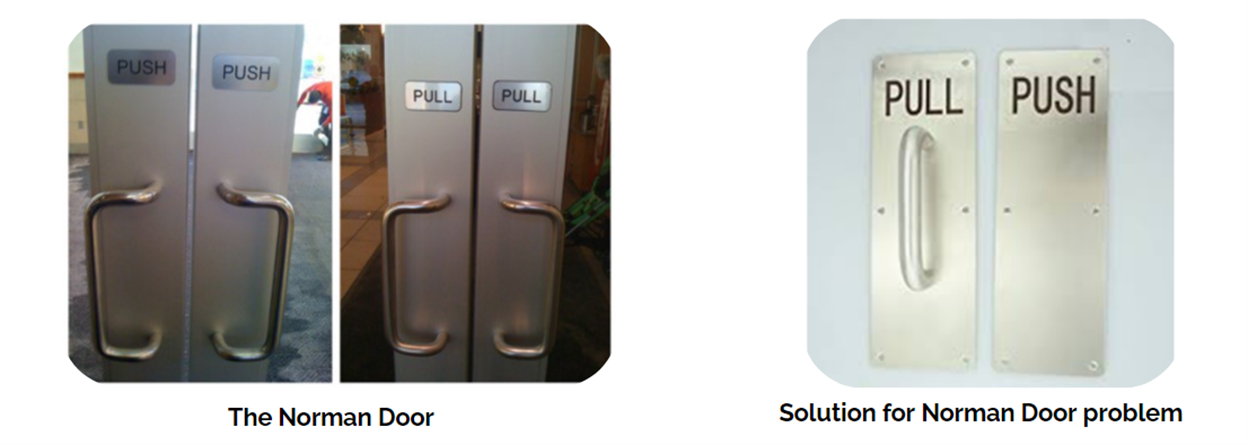
Everyday confusion also reveals the importance of human centred design. Another example of why human centric design matters is the classic push versus pull door dilemma. It was observed that people were having trouble knowing whether to push or pull on the Norman door, often hesitating, second guessing, or choosing the wrong action because the design failed to clearly guide behaviour.
The solution was simple and behaviour driven. Designers decided that a handle should only appear on doors meant to be pulled. If no handle is present, the natural response is to push. This small visual cue removes uncertainty and makes the correct action obvious without the need for signs or instructions. No extra explanation. No added complexity. Just a design choice that aligns with instinct. This is human centred design at work.
Designing for Everyday Frustration
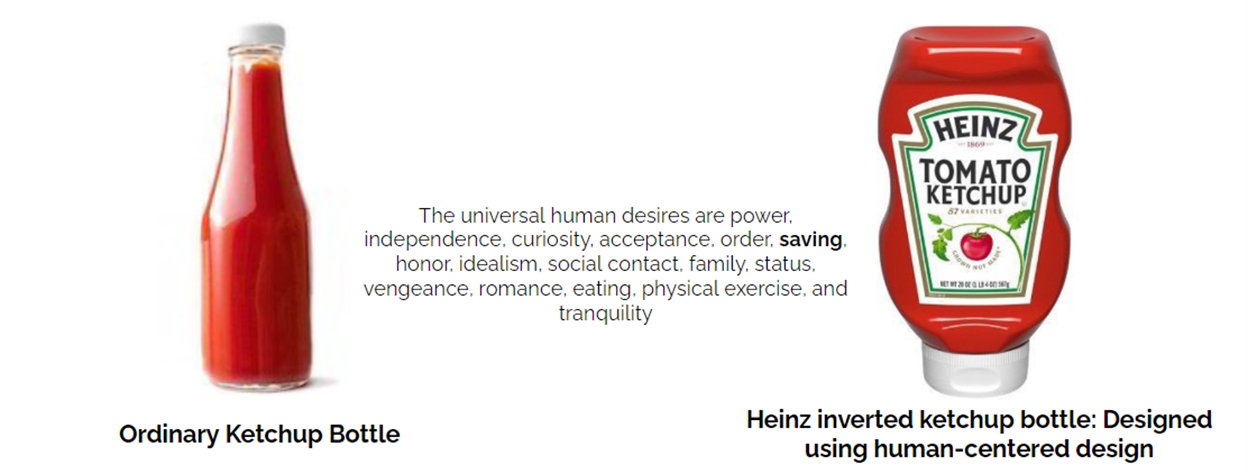
Another brilliant example of human centred design is Heinz’s shift from the glass ketchup bottle to the inverted, plastic, ergonomic one. The glass version was iconic, but it did not reflect how people actually use ketchup. Getting ketchup out often meant shaking the bottle, tapping the bottom, waiting impatiently, and then dealing with a sudden messy spill. The design did not match real behaviour and created frustration in a simple, everyday moment.
The inverted bottle changed that. Storing ketchup upside down keeps it ready to use, while the squeezable plastic gives more control and less mess. The product stayed the same, but the experience improved. A simple redesign turned a common annoyance into a smoother, more convenient moment.
A Final Thought
CX design goes far beyond aesthetics. It is about intention. The most successful experiences are built on a deep understanding of real customer behaviour, real frustrations, and real emotional drivers. Whether through crowdsourcing new ideas, painting simple safety markers, redesigning a door handle, or rethinking a ketchup bottle, the principle remains the same: design should remove friction, guide instinct, and create meaningful connection. When organizations commit to human centric design, customer journeys become clearer, service interactions become smoother, and loyalty becomes stronger. That is where lasting customer experience success begins. For organizations looking to embed these principles into their CX strategy, partnership and expertise matter.
Optimus SBR’s Experience Management Practice
Optimus SBR is an independently owned Canadian management consulting firm that works with organizations to execute what’s next. Our Experience Management professionals deliver a broad range of services to support you through every step of your journey, from Advisory Services to craft your customer and employee experience strategies, to Solutions Implementation, and Managed Services for ongoing improvement.
If you’re a leader looking to enhance the success of your experience management initiatives, please feel free to connect and learn more about opportunities to partner with us.
Derek Bildfell, Partner & Practice Lead ASI Experience Management Group
Derek.Bildfell@optimussbr.com





Industry Insights
Service Insights
Case Studies
Company News